How China Combats the Crime of “Providing Fake Certification Documents”†
Table of Contents
- A Typical Case in 2022
- An Amendment to China’s Criminal Law
- A Judicial Interpretation of Key Phrases Used
Estimated Reading Time
- 8 min
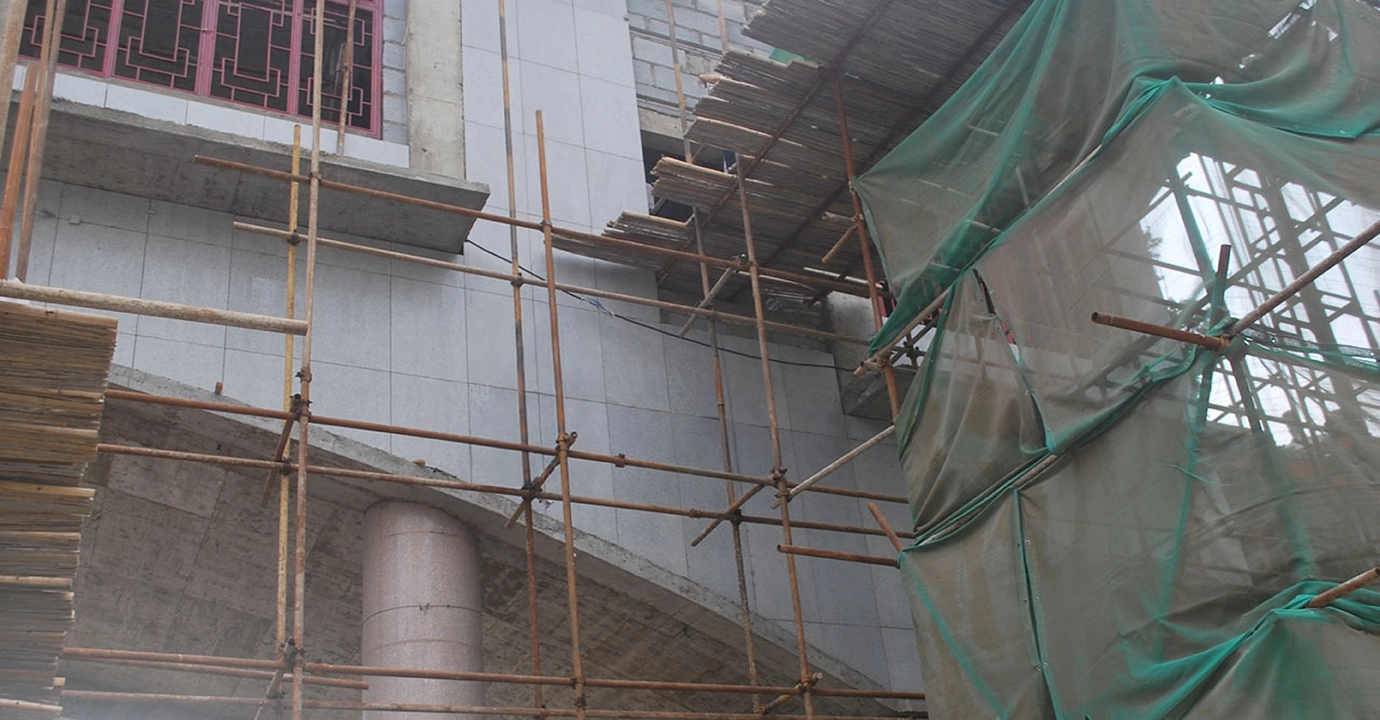
(Publicdomainpictures.net)
An independent committee chaired by a judge has been established in Hong Kong, a special administrative region of China, to investigate the causes and circumstances that led to the recent fire at Wang Fuk Court in Tai Po, which killed at least 160 residents of the housing complex and left nearly 80 injured.
Authorized to examine a wide range of issues, including “whether the construction safety requirements, standards, supervision and day-to-day maintenance regime for the building maintenance and renovation works were adequate”, the committee will not release results of its investigation until nine months from now. Yet, concerns about an alleged use of fake documents originating from mainland China to falsely certify the safety of substandard materials used in the housing complex that burned have already prompted Hong Kong authorities to examine similar materials used in other housing sites.
“Over the past several years, concerns about fake safety certification documents have led mainland China to step up its measures, through legal rules and cases, to better tackle the problem.”
Over the past several years, concerns about fake safety certification documents have led mainland China to step up its measures, through legal rules and cases, to better tackle the problem. Understanding these efforts should reassure those handling the fire in Hong Kong that their commitment to pursue accountability without reservation is matched by a similar commitment on the part of the mainland Chinese authorities.
A Typical Case in 2022
In December 2022, six Typical Cases were jointly issued by China’s Supreme People’s Court and Supreme People’s Procuratorate (which oversees prosecution of criminal acts, among other responsibilities) to illustrate the manner in which “crimes endangering production safety” may be punished in accordance with law.
One of the six Typical Cases concerns an institute in Jiangsu Province that was qualified to provide safety assessment services. From 2013 to 2018, the institute provided such services to a chemical company. For a total amount of RMB 170,000, the institute issued to the chemical company four safety assessment reports, which were signed by the institute’s personnel without performing reasonable on-site investigations. Had the personnel performed such investigations, they would have noticed a large quantity of nitration waste being stored by the chemical company in coal sheds and other unsafe places.
“In early 2019, due to heat accumulation, the nitration waste combusted, resulting in an explosion that killed 78 people, seriously injured 76, and hospitalized 640. The direct economic losses amounted to nearly RMB 2 billion.”
In early 2019, due to heat accumulation, the nitration waste combusted, resulting in an explosion that killed 78 people, seriously injured 76, and hospitalized 640. The direct economic losses amounted to nearly RMB 2 billion.
Ultimately, according to then-applicable Article 229 of China’s Criminal Law, the main assessor of the institute was found guilty of providing fake certification documents and was, based on his confession, merely sentenced to three years and six months of imprisonment and fined RMB 25,000. The institute was fined RMB 300,000.
To help other Chinese courts and procuratorates handle similar cases, the Supreme People’s Court and Supreme People’s Procuratorate have highlighted the significance of this Typical Case in this way:
[…] When determining penalties for safety assessment intermediary organizations and their personnel who have committed the crime of providing fake certification documents, judicial organs should comprehensively consider all factors—including the methods used, the degree of subjective fault, the extent that [their acts] contributed to the occurrence of the safety accidents, the benefits gained, and their performance all along—and comprehensively assess the social harm caused to appropriately determine the penalties in accordance with the provisions of the Criminal Law, ensuring that the penalties are commensurate with the crime.
[emphasis added]
An Amendment to China’s Criminal Law
Considering the significant casualties and economic losses, the sentences imposed in the above Typical Case appear to be light. This shows the limitations of then-applicable Article 229 of the Criminal Law. In 2020, the provision was amended and this amended version remains effective today.
Paragraph 1 of the current version of Article 229 (“Article 229 Paragraph 1”) provides:
Personnel of intermediary organizations responsible for asset valuation, capital verification, authentication, accounting, auditing, legal services, sponsorship, safety assessment, environmental impact assessment, environmental monitoring, etc. who intentionally provide fake certification documents shall, if the circumstances are serious, be sentenced to fixed-term imprisonment of not more than five years or criminal detention, and shall also be fined. If one of the following circumstances exists, [the personnel] shall be sentenced to fixed-term imprisonment of not less than five years but not more than ten years, and shall also be fined:
(I) […];
(II) […];
(III) Providing fake certification documents such as safety assessment or environmental impact assessment documents in major engineering works and projects involving public safety, resulting in particularly significant losses to public property as well as the interests of the State and the people.
[emphasis added]
In the above quoted paragraph, the words emphasized in bold were added to Article 229 Paragraph 1 through the 2020 amendment. These changes reflect the legislative intent to highlight the need to punish the issuance of certain types of fake certification documents (e.g., safety assessment and environmental impact assessment documents) that were not explicitly mentioned before. In addition, listing three “particularly serious” circumstances under which longer sentences ranging from five to ten years can be imposed shows Chinese legislators’ determination to provide for more severe punishment in appropriate circumstances.
A Judicial Interpretation of Key Phrases Used
In the quoted paragraph discussed in the above section, three phrases are underlined. They are interpreted in a piece of judicial interpretation titled the Interpretation (II) of Several Issues Concerning the Application of Laws in Handling “Endangering Production Safety” Criminal Cases. The judicial interpretation was jointly issued by the Supreme People’s Court and the Supreme People’s Procuratorate in December 2022, the same period in which they issued the aforementioned Typical Case.
Article 6 of the judicial interpretation explains the circumstances in which “a certification document provided by the personnel of an intermediary organization responsible for safety assessment” can be deemed a “fake certification document” mentioned in Article 229 Paragraph 1 of the Criminal Law. One circumstance is where the certification document is “intentionally fabricated” and the other circumstance is where the certification document is prepared by “intentionally using questionable third-party certification materials and monitoring/testing reports to influence the assessment conclusions”. Article 6 also lists other circumstances, followed by a catch-all phrase: “other circumstances showing deceptive and fraudulent acts to influence the assessment conclusions.”
Article 7 of the judicial interpretation explains that if “the personnel of an intermediary organization responsible for safety assessment intentionally provide a false certification document”, “causing a safety accident” that results in “one or more deaths or three or more serious injuries” or “direct economic losses of RMB 500,000 or more”, the circumstance can be deemed a serious circumstance referred to in Article 229 Paragraph 1 of the Criminal Law. In addition to listing other examples of “serious circumstances”, Article 7 has a catch-all phrase: “other circumstances deemed serious”.
Further, according to Article 7 of the judicial interpretation, when a fake safety assessment document is provided in a major engineering work or project involving public safety, “causing a safety accident” that results in “three or more deaths or ten or more serious injuries” or “direct economic losses of RMB 5 million or more”, this result can be determined to meet the requirement of the phrase “resulting in particularly significant losses to public property as well as the interests of the State and the people” used in Article 229 Paragraph 1 of the Criminal Law. Article 7 also has a catch-all phrase: “other circumstances that result in particularly significant losses to public property as well as the interests of the State and the people.”
All of the above analysis shows mainland China’s determination to step up its legal measures to ensure that parties providing fake safety assessment documents are subject to penalties that are proportionate to the seriousness of the circumstances involved. Although these legal rules do not apply to Hong Kong, as the city has its separate legal system under the principle of “one country, two systems”, mainland China’s determination to hold wrongdoers accountable in these matters should inspire all parties handling the fire in Hong Kong to show a similar determination and do their best to seek justice for the victims.
- The citation of this article is: Dr. Mei Gechlik, How China Combats the Crime of “Providing Fake Certification Documents”, SINOTALKS.COM®, SINOTALKS® In Brief, Dec. 24, 2025, https://sinotalks.com/inbrief/crime-fake-certification-document.
- The original, English version of this article was edited by Nathan Harpainter. The information and views set out in this article are the responsibility of the author and do not necessarily reflect the work or views of SINOTALKS®. ↩︎
Related Articles