A Rising Chinese Province’s Preparation for Foreign Investment†
Table of Contents
Estimated Reading Time
- 6 min
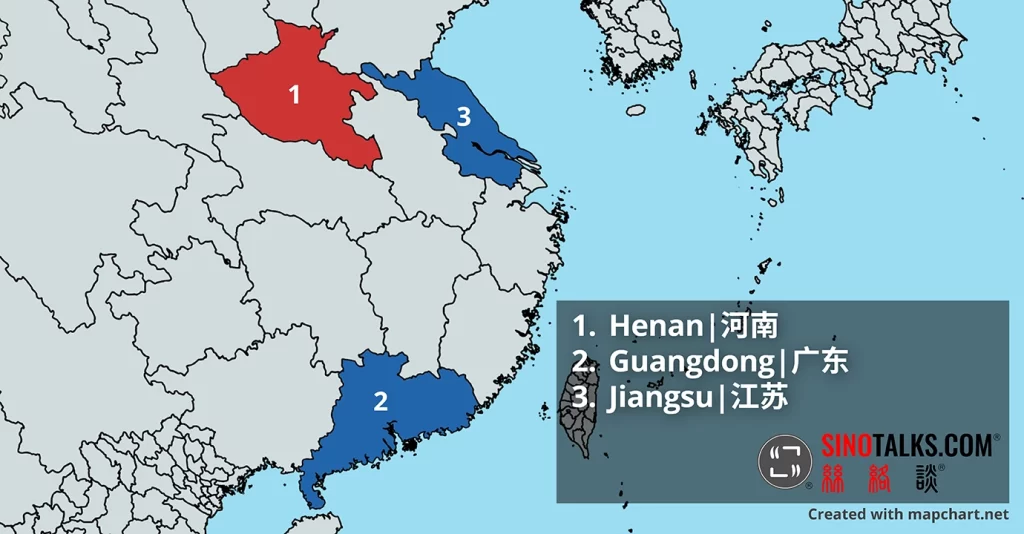
Recent visits to China by multiple national leaders, including Canadian Prime Minister Mark Carney and British Prime Minister Keir Starmer, have raised China’s hopes that it will see more foreign investment in 2026. Such optimism should be particularly prevalent in provinces that just released reports showing their impressive economic performance in 2025. Among such provinces is Henan, a landlocked province that hosts the Shaolin Monastery and many other cultural sites.
With a GDP of RMB 6.66 trillion in 2025, Henan still lagged behind key coastal provinces such as Guangdong and Jiangsu, whose GDPs were RMB 14.58 trillion and RMB 14.24 trillion, respectively. However, in terms of GDP growth, Henan outperformed Guangdong and Jiangsu with its 5.6 percent GDP growth rate, as the rates reported by Guangdong and Jiangsu were 3.9 percent and 5.3 percent, respectively. In fact, Henan recorded the fastest growth in GDP among China’s ten provinces with the highest GDPs in 2025.
To maintain Henan’s growing momentum, the provincial government has already introduced measures focusing on various areas, including foreign investment. While emphasizing the importance of protecting foreign investors’ legal rights and interests, Henan must deliver results due to its highest court’s handling of a landmark case, which has the potential to continue to weaken foreign investors’ confidence in the provincial judiciary.
Henan Province’s Economic Rise
The provincial government has attributed Henan’s GDP growth rate of 5.6 percent in 2025 to the gradual consolidation of the province’s development, as it points out that this rate is 1.2 percentage points higher than the average annual growth rate from 2021 to 2024.
“[…] the largest factory of BYD, a leading global automaker, began operations in 2023 in Zhengzhou, the capital and largest city of Henan.”
In addition, Henan’s positive economic performance in 2025 was primarily due to the rapid development of its secondary and tertiary industries, where the growth rates were 5.5 percent and 6.0 percent, respectively. For example, the largest factory of BYD, a leading global automaker, began operations in 2023 in Zhengzhou, the capital and largest city of Henan. Over an area of 10.67 square kilometers, this factory was able to produce 550,000 automobiles in 2024. This production capacity significantly contributed to Henan’s achievement in producing more than 1.5 million automobiles in 2025.
Another example is the tourism industry. In 2025, tourism generated RMB 1.08 trillion in revenue in Henan, representing a year-on-year increase of 5 percent. The total number of foreign tourists rose to nearly a million, for a year-on-year increase of 60.53 percent. This increase was largely driven by a visa-free policy implemented since July 2024. According to the policy, citizens of more than 50 countries may stay, without a visa, in select areas of Henan for up to 144 hours to engage in tourism, business, and/or other short-term activities.
It should be noted that Henan’s capital Zhengzhou was one of 29 Chinese cities that recorded a GDP of more than RMB 1 trillion in 2025. Zhengzhou’s GDP reached RMB 1.52 trillion, reflecting a year-on-year increase of 5.4 percent. Apart from hosting the largest factory of BYD, the city also has a remarkable micro-drama industry, which led to a 119.8 percent increase in operating revenue for the city’s film and television program production industry in 2025.
Preparation for Foreign Investment
To ensure that Henan continues to see strong economic growth in 2026, the provincial government issued a document on the first day of the year to identify several policy priorities. These priorities include the full utilization of the current 240-hour visa-free policy to attract more foreign visitors to not only boost tourism revenue but also facilitate more business activities.
In addition, the provincial government has designated local departments in charge of commerce, industry, and information technology, as well as the provincial development and reform commission to formulate detailed plans for the implementation of “major international cooperation projects”.
The opportunities to invest in a province with a track record of success should appeal to foreign investors. The government of Henan has issued multiple documents to emphasize the importance of protecting foreign investors’ legal rights and interests. However, judgments rendered by courts in the province carry more weight when foreign investors assess the local judiciary’s ability to protect their rights and interests.
An example is a dispute between Ge Mei Investment Limited (“Ge Mei”), a foreign company, and the Yingcheng Group, a local company in Henan, that occurred almost a decade ago. The dispute concerned an equity transfer contract signed by these two companies, in which Ge Mei agreed to transfer its 40 percent equity stake in a foreign-invested enterprise in Henan to the Yingcheng Group for RMB 100 million. Requiring the amount to be paid by March 31, 2016, the contract also stipulated that it “shall become effective upon approval by the relevant approving authority”. For reasons irrelevant to the discussion here, the application for such approval was withdrawn and the contract was, therefore, never approved by the authority.
Ge Mei transferred the shares to the Yingcheng Group, which failed to pay the required RMB 100 million. The High People’s Court of Henan Province ruled against Ge Mei in the first instance of the case. On appeal, the Supreme People’s Court disagreed and rendered a judgment to order the payment of RMB 100 million to Ge Mei. The legal principles established by the Supreme People’s Court in this case were subsequently identified as having “great significance in guiding the handling of disputes involving foreign-invested enterprises and protecting the legal rights and interests of foreign investors”.
The key issue facing the Supreme People’s Court was that on October 1, 2016 (i.e., after the equity transfer contract at issue was signed), new legal rules came into effect. According to these rules, beginning from October 1, 2016, equity transfer contracts like the one between Ge Mei and the Yingcheng Group were no longer subject to administrative approvals. As a result, the Supreme People’s Court ruled that the phrase ““shall become effective upon approval by the relevant approving authority” in the contract at issue should not be considered a condition for the coming into effect of the contract. Therefore, the contract was deemed effective, and Ge Mei was entitled to receive the payment accordingly.
“In its judgment, the Supreme People’s Court pointed out mistakes made by the High People’s Court of Henan Province […].”
In its judgment, the Supreme People’s Court pointed out mistakes made by the High People’s Court of Henan Province and concluded that the local court’s “application of the law was partially incorrect”. While it is, arguably, not unusual to see an appellate court’s disagreement with a lower court’s interpretation and application of the law, this landmark case is likely to continue influencing foreign investors’ perception of Henan’s courts. A good deal of work is, therefore, awaiting Henan to strengthen foreign investors’ confidence in its judiciary.
- The citation of this article is: The Editorial Board of SINOTALKS®, A Rising Chinese Province’s Preparation for Foreign Investment, SINOTALKS.COM®, SinoExpress™, Feb. 11, 2026, https://sinotalks.com/sinoexpress/chinese-province-henan-investment. ↩︎
Related Articles