A Major Omission at the Xi–Cheng Meeting†
Table of Contents
Estimated Reading Time
- 6 min
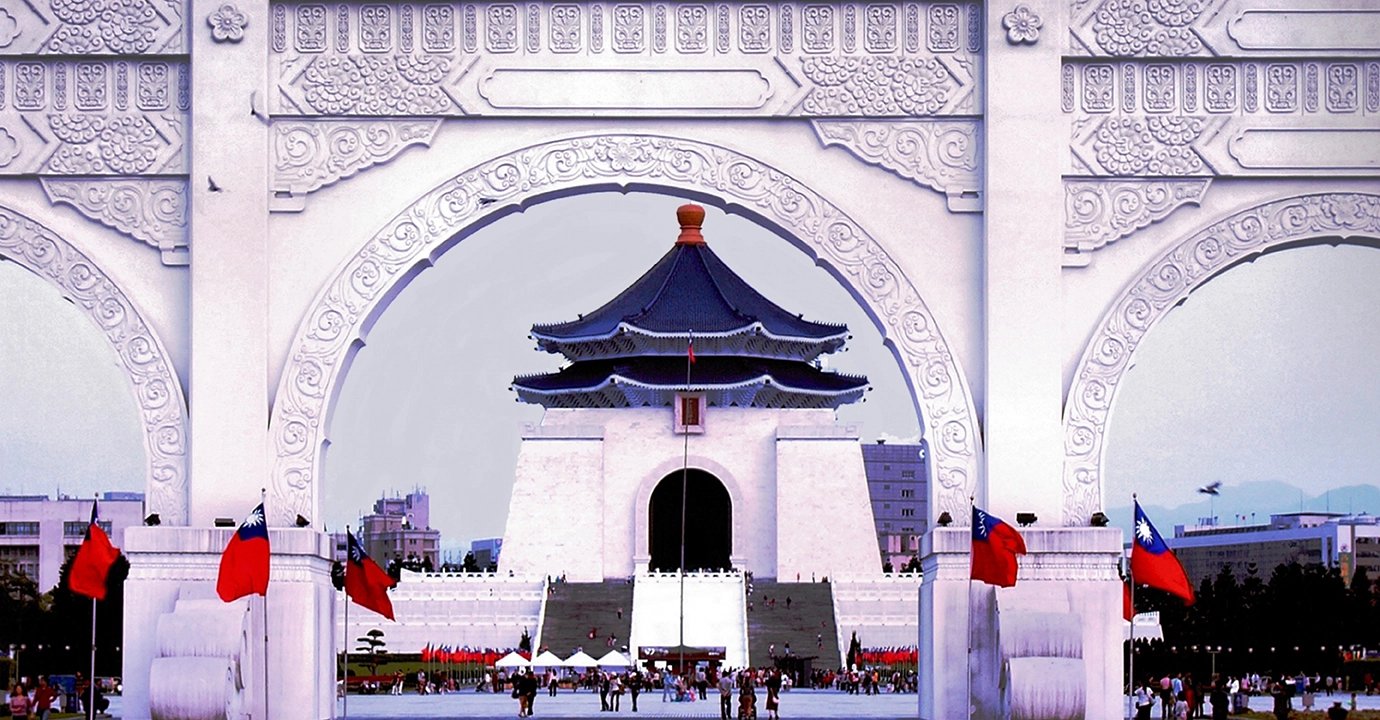
(Publicdomainpictures.net)
At his recent meeting with the Chairperson of Taiwan’s main opposition Nationalist Party (or Kuomintang) CHENG Li-wun, General Secretary of the Central Committee of the Chinese Communist Party (“CCP”) XI Jinping enumerated four “opinions” about cross-strait relations, including reunification. The principle “one country, two systems”—which China relied on to resume its sovereignty over Hong Kong and Macao on July 1, 1997, and December 20, 1999, respectively—was not mentioned at all. This omission stands in contrast with how Xi has previously reiterated in numerous key speeches the importance of using this principle to resolve the “Taiwan issue”. A similar omission can be seen in China’s 15th Five-Year Plan for National Economic and Social Development (2026–2030). This begs the question: Has China adopted a new approach to resolving the “Taiwan issue”?
Xi Jinping’s Four Opinions
During the Xi–Cheng meeting held on April 10, Xi Jinping enumerated his four “opinions” regarding the development of cross-strait relations. The first three opinions concern the need to “foster spiritual harmony through a correct sense of identity […] with the Chinese nation, Chinese culture, and the great motherland”, “safeguard the shared homeland through peaceful development”, and “enhance the well-being of the people through exchanges and integration”.
The fourth “opinion” concerns the need to “achieve the great rejuvenation of the Chinese nation through unity and concerted effort”. After stating that the year 2026 marks the 160th anniversary of the birth of Dr. Sun Yat-sen—who founded the Republic of China and the Kuomintang—Xi stressed Dr. Sun’s lifelong commitment to revitalizing China and achieving national reunification. Xi followed this with an expression of Beijing’s hope to “share development opportunities and achievements” with “compatriots in Taiwan” and to “work together to strengthen the economy of the Chinese nation”.
“In these four carefully prepared ‘opinions’, the term ‘one country, two systems’ was not even referenced once.”
In these four carefully prepared “opinions”, the term “one country, two systems” was not even referenced once.
A New Approach in the New Era
The omission of the term “one country, two systems” in Xi’s four “opinions” is notable because it completely differs from China’s previous approach, as reflected in Xi’s reports to the National Congress of the CCP in October 2017 and October 2022.
In October 2017, after completing his first term as the General Secretary of the CCP’s Central Committee, Xi presented his report to the 19th National Congress of the CCP, in which he stated that “resolving the Taiwan issue to achieve the complete reunification of the motherland” is the shared aspiration of all Chinese people. Xi continued to emphasize that “[we] must continue to adhere to the principles of ‘peaceful reunification’ and ‘one country, two systems’, promote the peaceful development of cross-strait relations, and advance the process of the peaceful reunification of the motherland”.
In October 2022, after completing his second term as the General Secretary of the CCP’s Central Committee, Xi presented his report to the 20th National Congress of the CCP. In the report, he stated that the principles of “peaceful reunification” and “one country, two systems” present “the best way to achieving the cross-strait reunification” and are “most beneficial to compatriots on both sides of the strait and to the Chinese nation”.
However, China’s 15th Five-Year Plan for National Economic and Social Development (2026–2030), which was passed in March 2026, suggests that a new approach to resolving the Taiwan issue has emerged. Titled “Promoting the Peaceful Development of Cross-Strait Relations and Advancing the Great Cause of National Reunification”, Chapter 60 of the plan begins with a line that shows China’s resolution: “[We] will thoroughly implement the Party’s overall strategy for resolving the Taiwan issue in the new era”. This opening line is followed by China’s emphasis on adhering to the one-China principle, combating “Taiwan independence” separatist forces, opposing interference by external forces, and maintaining peace and stability across the Taiwan Strait, among other standard phrases used.
The term “one country, two systems” is absent from Chapter 60 of the plan. The entire chapter has two sections only, which outline how China plans to “promote cross-strait economic cooperation” and “deepen cross-strait exchanges”.
Implications for Taiwan’s Future
“The lack of reference to the term ‘one country, two systems’ […] seems to suggest that the CCP’s ‘overall strategy for resolving the Taiwan issue in the new era’ is to pursue a looser form of reunification.”
The lack of reference to the term “one country, two systems” in Xi’s four “opinions” and China’s latest five-year plan seems to suggest that the CCP’s “overall strategy for resolving the Taiwan issue in the new era” is to pursue a looser form of reunification. This new form of reunification no longer needs to be based on the principle of “one country, two systems”, but must instead be rooted in economic cooperation and exchanges while adhering to the broad principles stated in the opening paragraph of Chapter 60 of the five-year plan, as discussed above.
This new form of reunification may appeal to more people in Taiwan. Yet a new step taken by Beijing should be noted. A new law titled the Law of the People’s Republic of China on National Development Plans was passed by China’s National People’s Congress in March 2026. Apart from requiring the State Council to organize the implementation of each national development plan (e.g., the 15th five-year plan), the new law also requires localities to formulate and implement their local five-year plans to align with the national five-year plan that is in effect at the time.
As Hong Kong and Macao are special administrative regions that are governed in accordance with their own systems, this new law does not directly require these two regions to formulate their own five-year plans. Instead, Article 37 of the law articulates in more subtle language:
The State upholds the principle of “one country, two systems” and supports the Hong Kong Special Administrative Region and the Macao Special Administrative Region to proactively align [their developments] with national development plans and to integrate [themselves] into—as well as serve—the overall landscape of national development.
The actual steps that Beijing eventually requires Hong Kong and Macao to take in the coming years to align their developments with the 15th five-year plan will reveal the degree of autonomy each region is able to retain.
The experiences of Hong Kong and Macao in this context are crucial references for Taiwan. Even if China indeed intends to apply to Taiwan a new form of reunification rooted in economic cooperation and exchanges, China will still likely require Taiwan to align the island’s development with each national development plan that is carefully crafted by the CCP and to “serve the overall landscape of national development”. This begs another question: Will people in Taiwan accept this arrangement?
- The citation of this article is: The Editorial Board of SINOTALKS®, A Major Omission at the Xi–Cheng Meeting, SINOTALKS.COM®, SinoExpress™, Apr. 15, 2026, https://sinotalks.com/sinoexpress/taiwan-xi-cheng-meeting. ↩︎