Can China Balance Between Languages and Reunification?†
Table of Contents
Estimated Reading Time
- 7 min
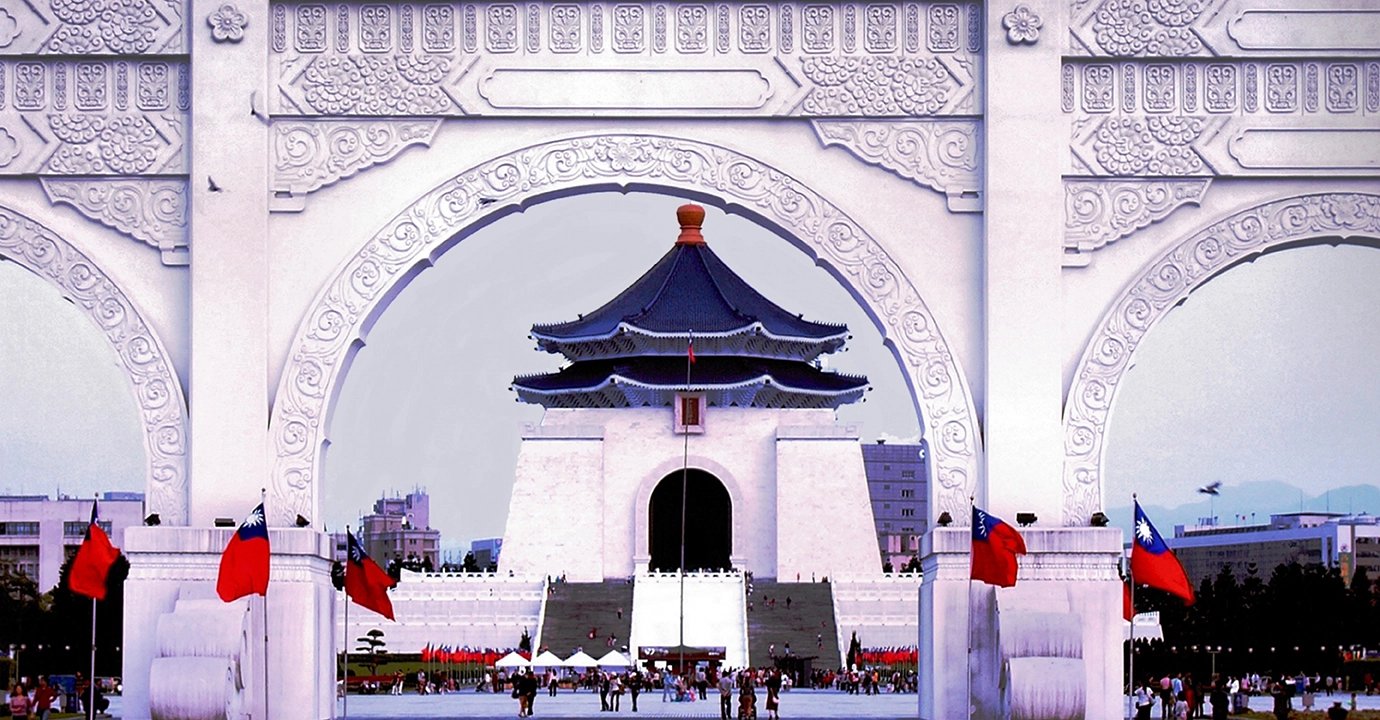
(Publicdomainpictures.net)
China’s newly revised law on the use of simplified Chinese characters across the country has, among other requirements, new provisions increasing punishments imposed on parties who violate the law and emphasizing the leadership of the Chinese Communist Party (“CCP”). If the CCP is indeed interested in resolving the “Taiwan issue” through peaceful reunification, the language differences between the two sides of the Taiwan Strait should be addressed. Giving consideration to how best to resolve these differences would closely align with the “opinions” enumerated by CCP leader Xi Jinping during his recent meeting with Taiwan’s Kuomintang Chairperson CHENG Li-wun: “foster spiritual harmony through a correct sense of identity […] with the Chinese nation, Chinese culture, and the great motherland” (see A Major Omission at the Xi–Cheng Meeting).
The revised law does make it possible to create exceptions allowing not only people in Taiwan, but also those in Hong Kong and Macao to use traditional Chinese characters deeply rooted in Chinese culture. Yet a better and long-term approach is worth considering.
The Revised Law
The revised Law of the People’s Republic of China on the National Common Spoken Language and Written Characters came into effect on January 1, 2026. Like the older version, which became effective 25 years ago, this new version also specifies that the “national common spoken language and written characters” in China are, respectively, Putonghua and “standardized Chinese characters”—meaning, characters simplified from traditional characters decades ago by the CCP, in the hope of lowering the illiteracy rate in an impoverished country at the time.
Compared with the older version, the revised law shows six notable changes, among others. First, the expression “forg[ing] a strong sense of community for the Chinese nation and strengthen[ing] cultural confidence” is now included in Article 1 as additional purposes in enacting the law.
Second, Article 2 of the revised law states that the “national common spoken language and written characters” are the “national statutory spoken language and written characters for use across the country [emphasis added]”. The term “across the country” will likely raise concerns about whether the revised law is meant to be applied to the entire territory of the People’s Republic of China, i.e., including the Hong Kong Special Administrative Region and the Macao Special Administrative Region—which were reunified with “the motherland” on July 1, 1997, and December 20, 1999, respectively—and potentially the island across the strait should reunification with Taiwan occur.
Third, Article 5 of the revised law now explicitly requires China’s endeavors regarding the “national spoken language and written characters” to adhere to “the leadership of the Communist Party of China”.
Fourth, after stating that “[s]chools and other educational institutions shall use the national common spoken language and written characters as the primary media for education and instruction,” Article 11 of the revised law, unlike the older version, does not continue to state: “unless otherwise provided by law”. This no-exception requirement is followed by a new provision under Article 11: “Upon completion of compulsory education, students should be able to have a basic command of the national common spoken language and written characters.”
Fifth, Article 16 of the revised law provides new content: “For international exhibitions, international conferences, and similar events held within the territory, whenever signs, placards, promotional materials, or other items require the use of foreign spoken and written languages, the national common spoken language and written characters should be used at the same time.”
Sixth, Article 4 of the revised law has a new sentence: “No organization or individual shall hinder a citizen from studying or using the national common spoken language and written characters.” This new sentence should be read together with Article 31 of the revised law, which provides:
[Anyone who], in violation of the provisions of this Law, interferes with another person’s study or use of the national common spoken language and written characters shall be subject to criticism and education by relevant departments, ordered to rectify [the conduct], and may be issued a warning; if the conduct constitutes a public security administration violation, a public security administration punishment shall be imposed in accordance with law.
[emphasis added]
“[…] potential public security administrative punishments include, for example, warnings, fines, and administrative detention.”
The emboldened words are new. According to the Law of the People’s Republic of China on Public Security Administration Punishments, potential public security administrative punishments include, for example, warnings, fines, and administrative detention.
Traditional Characters Under the Revised Law
All of the above revisions were justified by Beijing on various grounds, including that “[p]romoting and popularizing the national common spoken language and written characters is vital to national unification and ethnic solidarity”.
Article 19 of the revised law lists several circumstances under which “traditional characters or variant characters may be retained or used”. These circumstances include, for example, the retention or use of such characters in “cultural relics and historical sites” and “works of art, such as calligraphy and seal carving” as well as “[circumstances] where such use is required for purposes of publishing, teaching, or research”. The last item of the list is “special circumstances approved by relevant departments of the State Council”.
Arguably, Beijing might rely on Article 19 to exceptionally allow the use of traditional characters in Hong Kong, Macao, and, potentially, Taiwan should reunification with the island occur. Yet this approach prolongs the differences between the writing system used in these places and the one used in mainland China.
An Inclusive Approach
A better and long-term approach that is worth considering is to gradually revive the use of traditional characters that are objectively determined to carry cultural significance.
As China’s official data show that the country’s illiteracy rate has declined to 2.67%, the justification for promoting simplified Chinese no longer exists. Instead, China is now a country that has mastered rocket science to successfully explore the far side of the Moon. Shouldn’t the people of this scientifically advanced country, especially its young students, be given the opportunity to strengthen their bonds with their culture through learning and using more traditional characters?
“In fact, China has been taking some steps to include in the country’s writing system characters that were excluded before.”
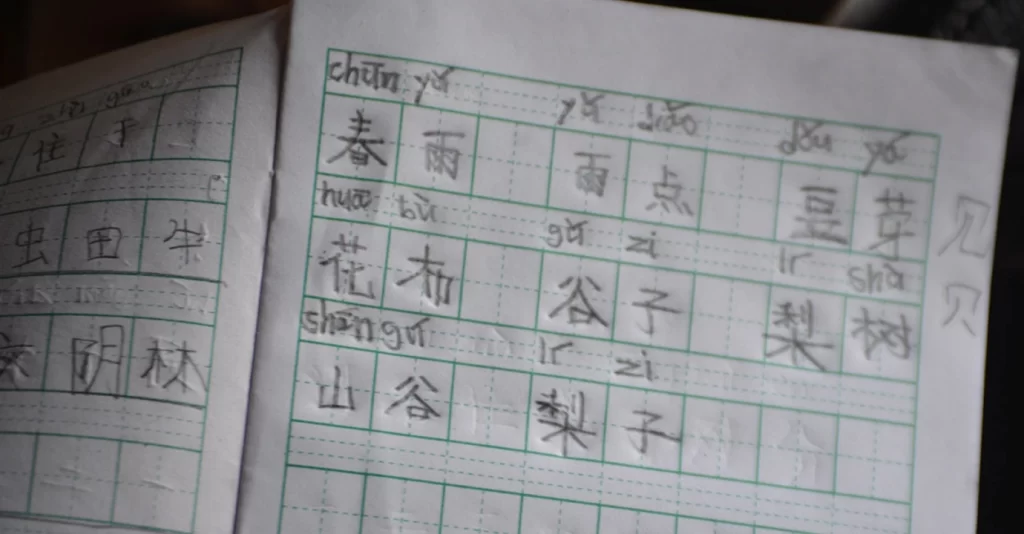
In fact, China has been taking some steps to include in the country’s writing system characters that were excluded before. For example, in June 2013, the State Council released the latest list of “standardized Chinese characters”, which has a total number of 8,105 characters. Among these characters are characters such as 皙, 喆, 昇, and 邨 that were excluded before.
It should be noted that when the State Council announced the list in 2013, it also emphasized that the list “may be supplemented and adjusted”, based on “developments and changes in linguistic life and actual needs”. “Actual needs” for such adjustment exist now.
Harmonizing the language differences across the Taiwan Strait will not allow Beijing to address all the complexities associated with the “Taiwan issue”. However, any failure by Beijing to harmonize these differences could undermine the chances for peaceful reunification because it would miss an opportunity to build consensus on an important issue. People in Taiwan are simply striving to preserve the literary heritage—a key component of Chinese culture that the CCP seeks to protect to “strengthen cultural confidence”.
- The citation of this article is: Dr. Mei Gechlik, Can China Balance Between Languages and Reunification?, SINOTALKS.COM®, SINOTALKS® In Brief, Apr. 29, 2026, https://sinotalks.com/inbrief/language-taiwan-china.
- The original, English version of this article was edited by Nathan Harpainter. The information and views set out in this article are the responsibility of the author and do not necessarily reflect the work or views of SINOTALKS®. ↩︎
Related Articles