China’s Push for a “Community with a Shared Future for Mankind”†
Table of Contents
Estimated Reading Time
- 7 min

(Publicdomainpictures.net)
In late May, former ambassador of China to the United States CUI Tiankai stated that China is committed to building “a community with a shared future for mankind” and rejects any “Group of Two” (G2) concept to refer to the bilateral relationship between the United States and China.
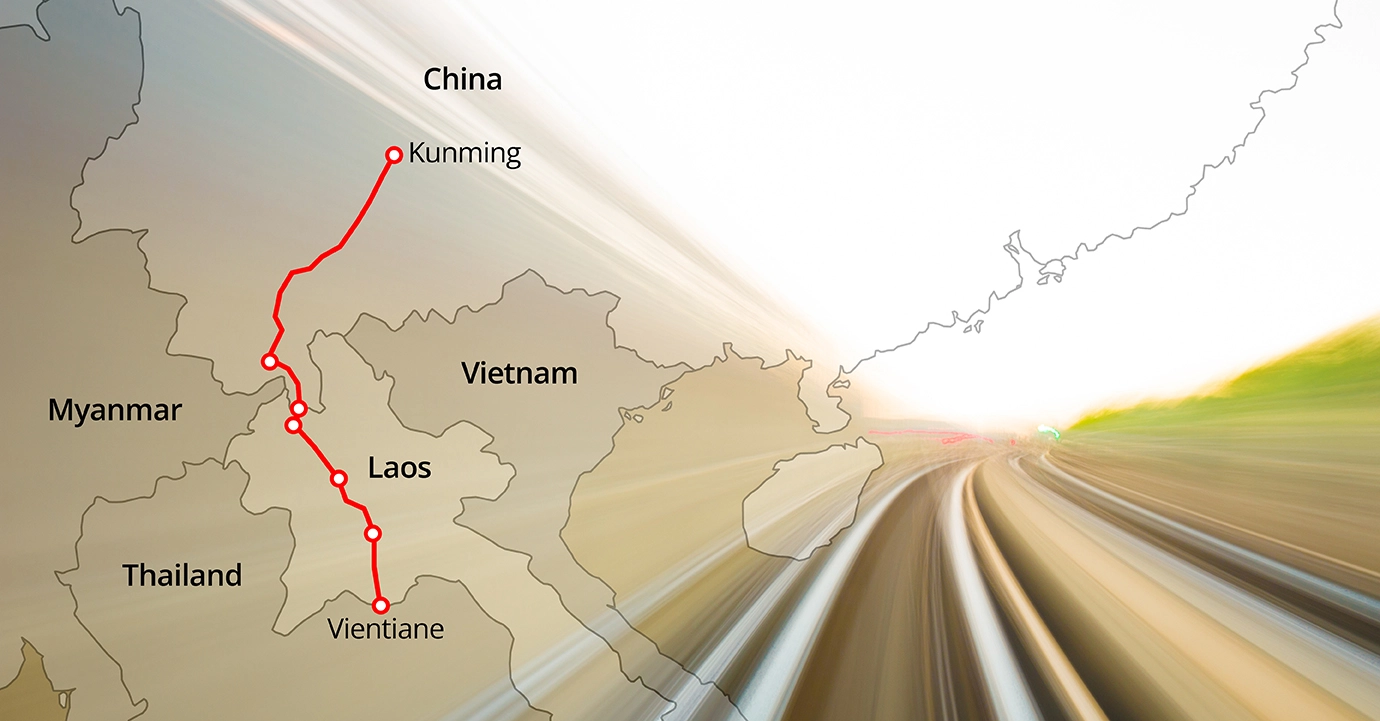
Building such a community is a principle that is central to achieving President XI Jinping’s vision of “socialism with Chinese characteristics for a new era”, which has been enshrined in the Chinese Constitution since 2018. China’s Minister of Foreign Affairs WANG Yi has shed light on the interpretation of the principle. The recent release of a joint declaration by China and Laos—a landlocked country that has become better connected with neighboring countries since the China–Laos Railway began operation in 2021—on building “a community with a shared future” between the two countries illustrates how China applies the principle in practice to grow its own global influence.
As much as China aspires to build “a community with a shared future for mankind”, a statement recently made by Lee Hsien Loong, Singapore’s former Prime Minister and current Senior Minister, suggests that China’s push to build this community will face resistance.
China’s “Community with a Shared Future for Mankind”
In March 2018, the Chinese Constitution was amended to include the phrase “Xi Jinping Thought on Socialism with Chinese Characteristics for a New Era” (“Xi Jinping Thought”) in the preamble of the Constitution, which now reads:
Under the leadership of the Chinese Communist Party and the guidance of Marxism-Leninism, Mao Zedong Thought, Deng Xiaoping Theory, […] and Xi Jinping Thought on Socialism with Chinese Characteristics for a New Era, the Chinese people of all ethnic groups will continue to […] carry out reform and opening up, [and] develop the socialist market economy[…].
[emphasis added]
“This amendment has elevated President Xi’s status to the level of two significant leaders in China’s history […].”
This amendment has elevated President Xi’s status to the level of two significant leaders in China’s history: MAO Zedong, who led the Chinese Communist Party to the founding of the People’s Republic of China, and DENG Xiaoping, who initiated China’s economic reform. Since the passing of Mao and Deng, no Chinese leader other than President Xi has attained the level of recognition so as to be explicitly mentioned in the Constitution.
“Persisting in promoting the building of a community with a shared future for mankind” is one of the 14 fundamental principles of Xi Jinping Thought. In November 2025, the People’s Daily published an article written by Minister of Foreign Affairs WANG Yi, in which he discusses the principle. The first sentence of the article reads: “Promoting the building of a community with a shared future for mankind is the lofty goal pursued via the diplomacy of a major country with Chinese characteristics for the new era.”
Apart from emphasizing that the principle is “a major, original concept” put forward by President Xi and represents “the Chinese answer to the epochal question of ‘what kind of world to build and how to build it’”, Wang also explains:
Building a community with a shared future for mankind—guided by a deep concern for the future of humanity and the well-being of all peoples—advocates transcending conflict and confrontation through peaceful development, replacing absolute security with common security, rejecting zero-sum games in favor of mutual benefit and win-win outcomes, preventing clashes of civilizations through exchange and mutual learning, and safeguarding our planetary home through green development. [This principle] has anchored clearer goals and painted a sharper picture for the future of mankind, pointing out the only correct path [forward] for a world standing at a critical historical juncture.
[emphasis added]
While the picture painted in the above paragraph is appealing, critics may find the content unreflective of the political reality and take issue with “the only correct path” directive. Critics may further question: if the “shared future for mankind” is truly at issue, should not all stakeholders explore the solution, instead of one party offering a solution that is described as “the only correct path”? Apparently prepared for such reactions, Wang continues to explain:
[The vision of] building a community with a shared future for mankind has been stated in resolutions of the U.N. General Assembly for eight consecutive years and has been incorporated into bilateral and multilateral declarations multiple times. Facts have proven that building a community with a shared future for mankind has become the greatest common denominator for the peoples of all nations in their joint endeavor to build a better world; it is bound to demonstrate ever-increasing influence, vitality, and appeal, serving as a radiant banner guiding the progress of our times.
[emphasis added]
“[…] the General Assembly’s resolutions are not legally binding on member states of the United Nations.”
It should be noted that while the U.N. General Assembly is authorized to “discuss any questions or any matters within the scope of the present [U.N.] Charter or relating to the powers and functions of any organs provided for in the present Charter, and […] make recommendations to the Members of the United Nations or the [Security Council] or to both on any such questions or matters”, the General Assembly’s resolutions are not legally binding on member states of the United Nations.
From Laos to ASEAN
China’s aspiration to build a community with a shared future for mankind is embraced by Laos. At the end of President of Laos Thongloun Sisoulith’s state visit to China in early June, the two countries jointly declared to build a “Round-the-Clock China-Laos Community with a Shared Future for the New Era”. Through this community, the two countries aim to, among other goals, “consolidate high-level political mutual trust”, “forge highly resilient security cooperation”, and “promote […] close, high-standard strategic coordination”. Specifying that this community is meant to serve as an example for building a community with a shared future for mankind, the joint declaration further states that both China and Laos have agreed to strengthen China–ASEAN cooperation and “build a closer China–ASEAN community with a shared future”.
Like Laos, Singapore is a member state of ASEAN (i.e., the Association of Southeast Asian Nations), which promotes regional cooperation among its 11 member states located in Southeast Asia. In an interview with the media on May 22, former Prime Minister of Singapore Lee Hsien Loong explained that although Singapore’s population is mostly ethnic Chinese, the country is “a multiracial society” and “a separate country with separate sovereignty from China”. Lee further emphasized that while Singapore and China “cooperate as friends and in order to have mutual benefit”, their “interests do not completely align”.
The lack of complete alignment of interests is likely to lead to Singapore’s reservations about China’s aspiration to build “a community with a shared future for mankind”. Similar reservations are likely to be held by leaders of other countries which also have differences with China and whose voters value debate and the democratic process and are, therefore, unlikely to accept a concept originated from a communist leader, including one promoted as the only correct solution for humanity. To these countries, the harder China pushes for “a community with a shared future for mankind”, the more resistance it may receive.
- The citation of this article is: The Editorial Board of SINOTALKS®, China’s Push for a “Community with a Shared Future for Mankind”, SINOTALKS.COM®, SinoExpress™, June 10, 2026, https://sinotalks.com/sinoexpress/singapore-laos-china-community-shared-future. ↩︎
Related Articles