China’s Strategic Partners and Law on Ethnic Unity†
Table of Contents
Estimated Reading Time
- 8 min

(Publicdomainpictures.net)
The extraterritorial reach of China’s new law on “ethnic unity” has drawn attention because the law has a broadly phrased provision stating that “organizations and individuals” located outside China can be held liable if they, targeting China, carry out acts “undermining ethnic unity and progress” or “creating ethnic division”. While this extraterritorial application of the law deserves attention, the domestic enforcement of the law must also be followed closely as, if mishandled, such enforcement could lead to circumstances that would complicate China’s relations with its strategic partners such as Kazakhstan.
“[…] if mishandled, such enforcement could lead to circumstances that would complicate China’s relations with its strategic partners such as Kazakhstan.”
Strategic Partnership and Migration
The importance of Kazakhstan to China is quite unique, as reflected in President XI Jinping’s official visits to the Central Asian nation in 2013 and 2022. During the 2013 visit, President Xi announced his concept of establishing the “Silk Road Economic Belt” and the “21st Century Maritime Silk Road”. This led to the establishment of the Belt and Road Initiative, whose member countries have since grown to more than 145. In 2022, which marked the 30th anniversary of the establishment of diplomatic relations between China and Kazakhstan, President Xi visited the Central Asian nation again. This visit was also symbolically important because it was President Xi’s first international trip following the outbreak of the COVID-19 pandemic.
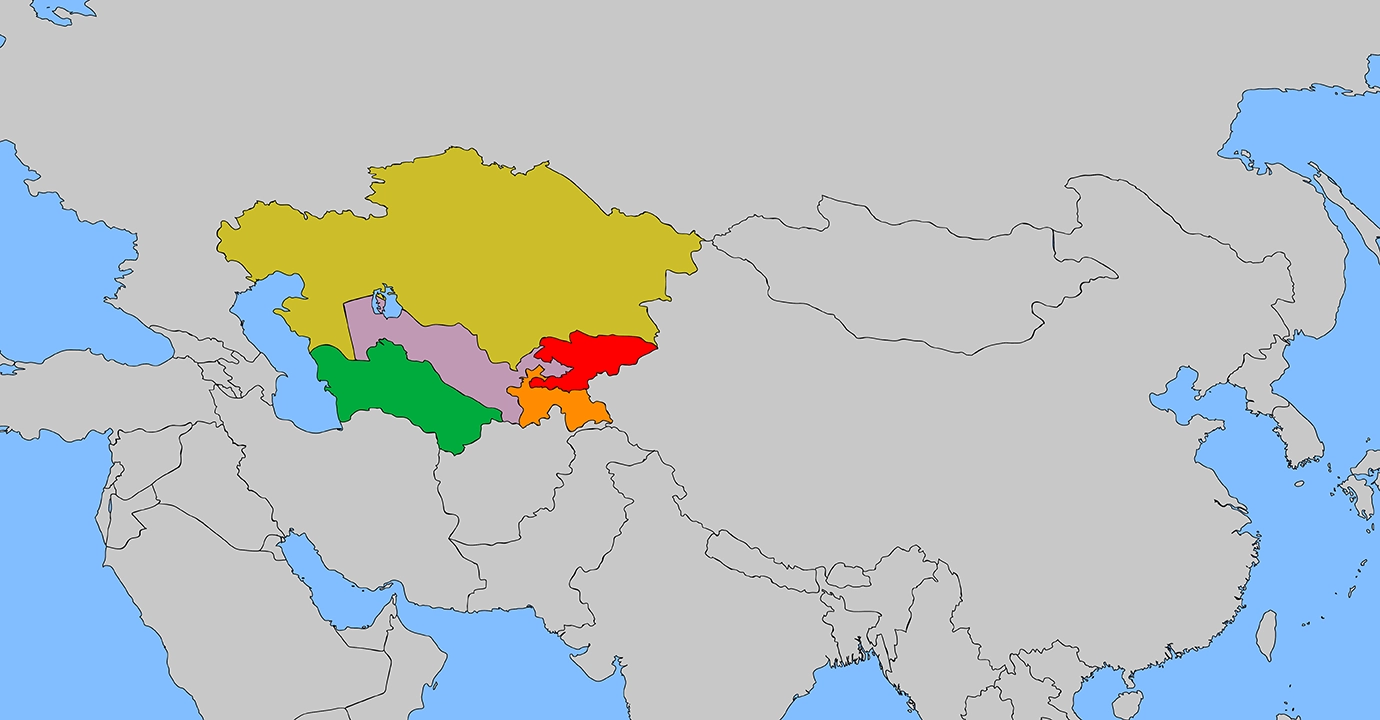
On April 30, 2026, China’s relations with Kazakhstan and four other Central Asian nations, namely, Kyrgyzstan, Tajikistan, Turkmenistan, and Uzbekistan, reached another level. On that day, with the Chinese national legislature’s ratification of the Treaty on Eternal Good-Neighborliness, Friendship, and Cooperation signed by China and these five Central Asian nations in June 2025, the treaty became effective. According to the treaty, the six parties have agreed to “comprehensively develop a long-term, stable strategic partnership” in accordance with “recognized principles and rules of international law” and on the basis of five other principles which require the countries to show “mutual respect for sovereignty and territorial integrity, mutual non-aggression, non-interference in each other’s internal affairs, equality and mutual benefit, and peaceful coexistence”. To help each party advance its development, the six countries have identified a wide range of areas for cooperation, including trade, energy, transportation, minerals, agriculture, and science and technology. They have also agreed to jointly combat terrorism, separatism, extremism, and illegal migration, among other issues.
Kazakhstan’s ongoing and projected economic growth—which is expected to reach USD 23,170 in nominal GDP per capita by 2031, according to the International Monetary Fund—has turned the country into a magnet for migrants from neighboring nations, including China. To ethnic Kazakhs living outside Kazakhstan, the thriving Central Asian nation looks even more attractive because, as more than 70 percent of its population of twenty millions is ethnically Kazakh, Kazakhstan provides an environment where they can integrate more easily.
In fact, Kazakhstan’s official data show that since 1991, more than 378,000 ethnic Kazakhs have migrated from China to reside permanently in Kazakhstan. Such migration has become particularly significant in recent years. For example, in 2025, 7,405 ethnic Kazakhs migrated from China to Kazakhstan, compared with 249 in 2021.
Migration and China’s Law on Ethnic Unity
The coming into effect of China’s Law on Promoting Ethnic Unity and Progress on July 1, 2026 might prompt more ethnic Kazakhs in China to consider migrating to Kazakhstan, as ambiguous phrases used in the law could trigger more concerns about how its provisions will be enforced.
Apart from “promoting ethnic unity and progress”, the law aims at “advancing the building of the community of the Chinese nation” and “facilitating the realization of the great rejuvenation of the Chinese nation”, among others. These goals must be accomplished under “the comprehensive leadership of the Communist Party of China”.
To help accomplish these goals, news media, publishing entities, and Internet service providers are expected to conduct such “publicity, reporting, and showcasing of achievements” that “forge a strong sense of community for the Chinese nation” and “advance the building of the community of the Chinese nation”. Organizations and individuals are prohibited from “producing or disseminating through text, images, audio, video, or other means” information containing content that “undermines ethnic unity and progress”.
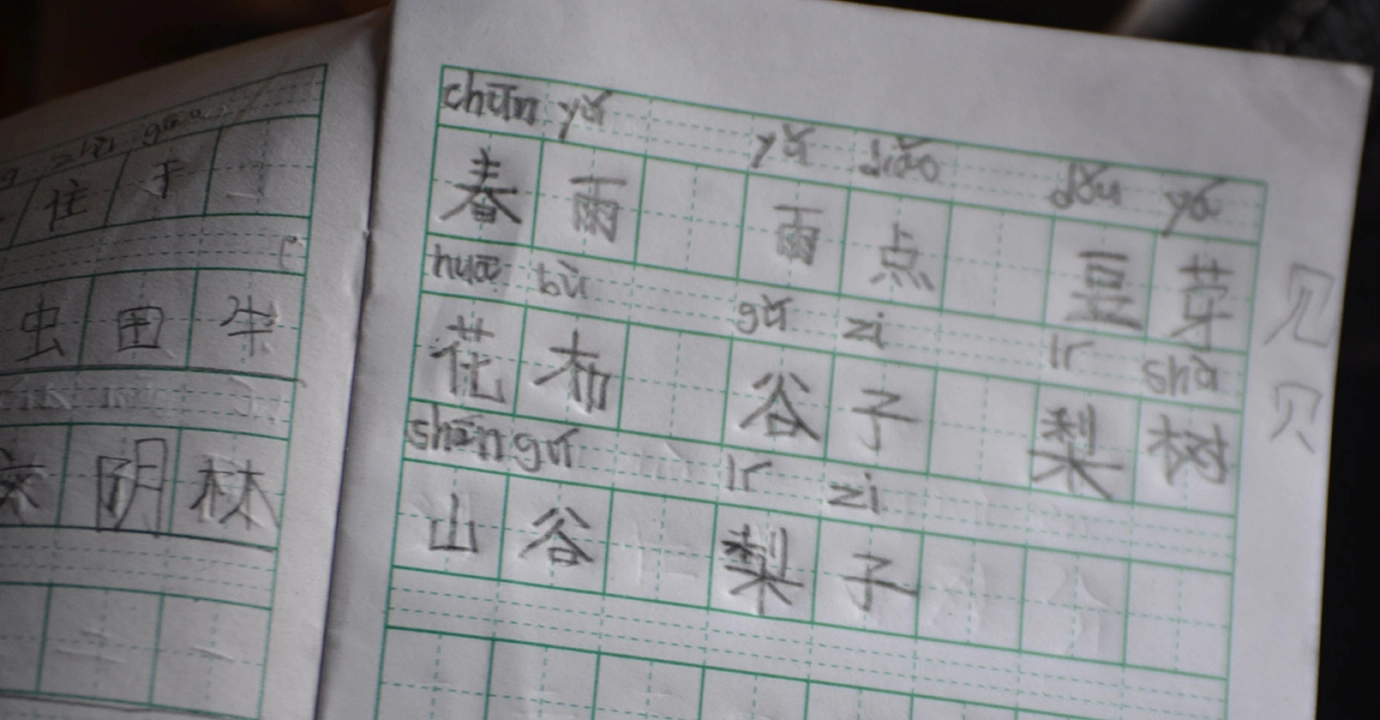
Article 15 of the law notably provides that “the State respects and safeguards the learning and use of spoken languages and written characters of ethnic minorities”. The article further provides that in situations where “state organs, social organizations, enterprises, public institutions, or other social organizations” need to use the “national common spoken language and written characters”—i.e., Putonghua and simplified Chinese characters, as stated in the revised Law of the People’s Republic of China on the National Common Spoken Language and Written Characters, which came into effect on January 1, 2026—along with “spoken languages and written characters of ethnic minorities” in public places, the “national common spoken language and written characters” should be given prominence. The article explains that such prominence concerns where the languages and characters appear, the sequence in which they are arranged, and “other aspects”—a catch-all expression that could be interpreted expansively by authorities enforcing the law.
A set of rules jointly issued in May 2026 by 13 local authorities overseeing housing, culture, ethnic affairs, public security, and other issues in Xinjiang helps illustrate challenges ethnic minorities could face when the above law is enforced at the local levels. The Administrative Provisions of Xinjiang Uygur Autonomous Region on the Installation of Large-Scale Outdoor Advertisements and the Display or Posting of Publicity Materials (“Administrative Provisions”), which came into effect on July 1, 2026, was formulated in accordance with different laws and regulations in China, including the Law on Promoting Ethnic Unity and Progress and the Law on the National Common Spoken Language and Written Characters.
“A set of rules jointly issued […] in Xinjiang helps illustrate challenges ethnic minorities could face when the above law is enforced at the local levels.”
Article 3 of the Administrative Provisions states:
[…] The content of large-scale advertisements installed outdoors and publicity materials displayed or posted on urban buildings and facilities should be truthful and lawful, in alignment with core socialist values […], and must not contravene public order or good morals. Videos, spoken languages and written characters, symbols, and graphic designs [used in the content] should comply with relevant laws, regulations, standards, and norms in the State and the autonomous region. The national common spoken language and written characters should serve as the fundamental spoken language and written characters used.
[emphasis added]
The above quoted paragraph, particularly the last sentence, creates ambiguity in how these rules may be interpreted in practice. As Article 22 of the Administrative Provisions specifies that “the Department of Housing and Urban-Rural Development of the [Xinjiang Uygur] Autonomous Region, in conjunction with relevant units”, is responsible for interpreting the provisions contained in the Administrative Provisions, how these authorities handle the interpretation in the end will signal to minorities in China, including ethnic Kazakhs, the extent to which ethnic diversity can still coexist effectively in a country that emphasizes ethnic unity.
Illegal Migration
In light of the above legal uncertainty, ethnic Kazakhs in China may consider opportunities in Kazakhstan even more favorably, especially because Kazakhstan is now a member of Pax Silica, the U.S.-led international technology initiative that is expected to bring more foreign investment from the West to the Central Asian nation.
Yet ethnic Kazakhs’ potential migration from China to Kazakhstan could become difficult because Kazakhstan has adopted a new migration policy aimed at making migration more selective by, for example, prioritizing “highly qualified specialists”—a requirement that many ethnic Kazakhs in China may not meet. The resulting mismatch between the desire of ethnic Kazakhs in China to migrate and the latest priorities of Kazakhstan concerning immigration could lead to illegal migration to Kazakhstan. As Kazakhstan and China have agreed to jointly combat illegal migration under the Treaty on Eternal Good-Neighborliness, Friendship, and Cooperation, how the two countries handle this issue may influence China’s approach to the domestic enforcement of its Law on Promoting Ethnic Unity and Progress. To avoid compromising its strategic partnership with this important Central Asian nation, China should monitor closely how the new law will be enforced, especially in localities populated with ethnic minorities.
- The citation of this article is: The Editorial Board of SINOTALKS®, China’s Strategic Partners and Law on Ethnic Unity, SINOTALKS.COM®, SinoExpress™, July 15, 2026, https://sinotalks.com/sinoexpress/china-ethnic-unity-law-kazakhstan. ↩︎
Related Articles