China, South Korea, Technology, and Asia’s Stability†
Table of Contents
Estimated Reading Time
- 6 min

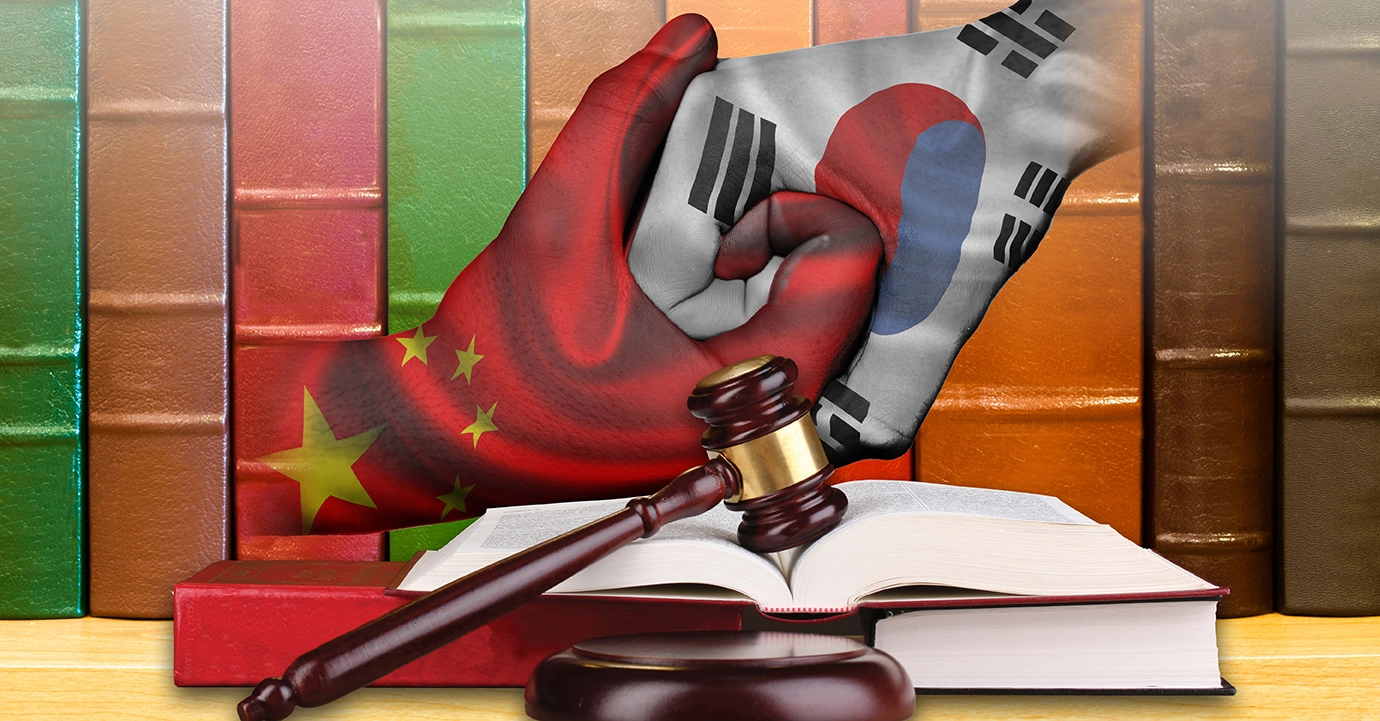
(Publicdomainpictures.net)
Amidst growing uncertainty in the West after the U.S. capture of Nicolás Maduro and his wife as well as increasing Sino-Japanese tension over Japanese Prime Minister Takaichi Sanae’s comments on Taiwan, Chinese President XI Jinping warmly welcomed South Korean President Lee Jae Myung’s state visit to seek support from an important neighbor.
Marked by thoughtful moments reflecting both leaders’ keen interest in building stronger ties, the state visit was concluded with China and South Korea signing documents to highlight their economic cooperation in trade, technology, transportation, and many other areas.
“Legal transactions arising from such economic cooperation may benefit from the seeds of mutual respect planted by the two countries’ judiciaries years ago.”
Legal transactions arising from such economic cooperation may benefit from the seeds of mutual respect planted by the two countries’ judiciaries years ago. Yet two uncertainties should linger on Chinese leaders’ minds: Will South Korea be able to sell computer chips to China, in defiance of external pressure? And will China be able to win the hearts of South Koreans, whose votes will influence President Lee’s decision?
Legal Foundation for a Stronger Economic Relationship
Two moments during President Lee’s state visit to China seem particularly significant. First, President Lee took a selfie with President Xi using a Xiaomi smartphone gifted by the Chinese leader last November when they both attended the APEC Economic Leaders’ Meeting that took place in South Korea. President Lee then posted the snapshot on social media platform X, describing it as a “once-in-a-lifetime photo”.
This congenial moment was followed by President Lee’s trip to a historic site in Shanghai. The site served as the office of the provisional government of the Republic of Korea that was run from 1926 to 1932 by Korean independence activists who opposed Imperial Japan’s colonial rule. In addition to thanking China for having preserved this site for decades despite various challenges, President Lee attributed part of the success of Korea’s independence to China’s support: “The history of Korea’s independence movement cannot be told without China. Nearly half of Korea’s independence movement sites are located in China, making it the principal stage of our struggle.”
These two friendly encounters evoke memories of an amicable China–South Korea judicial relationship established years ago resulting in the two countries’ mutual recognition and enforcement of their courts’ civil judgments.
In 2022, which marked the 30th anniversary of the establishment of China–South Korea diplomatic relations, China released a Typical Case highlighting its recognition and enforcement of a South Korean judgment. The decision was a step taken to reciprocate a South Korean court’s recognition and enforcement of a Chinese court judgment in 1999.
The significance of this Typical Case was explained by the Supreme People’s Court in the following manner:
Based on the principle of reciprocity, this case recognized and enforced the judgment of a South Korean court, actively maintaining the reciprocal relationship between China and South Korea and promoting the recognition and [enforcement] of judgments between the two countries. This [case] has a positive effect on the promotion of economic and trade cooperation and exchanges between the two countries […].
[emphasis added]
As China and South Korea just signed 15 cooperation documents to build strong economic ties, the aforementioned judicial relationship between the two countries will bode well for all parties entering into agreements aiming to optimize opportunities arising from economic cooperation between the two nations.
Two Uncertainties
The development of a solid Sino-South Korean relationship could, however, be compromised by at least the following two challenges.
- South Korea may face external pressure to avoid selling AI chips to China
Furiosa, a South Korean company, has captured the tech world’s attention because of its ability to make neural processing units (“NPUs”), a class of chips that can handle calculations needed for the development of AI technology while using less energy than the graphic processing units (“GPUs”) produced by Nvidia.
“If Furiosa’s NPUs prove to be superior and can be produced at a scale to meet China’s needs, they will be greatly favored by Chinese leaders […].”
If Furiosa’s NPUs prove to be superior and can be produced at a scale to meet China’s needs, they will be greatly favored by Chinese leaders who are concerned about the potential for Nvidia’s chips to be equipped with “tracking and positioning” functions that could undermine China’s security. These concerns, together with a desire to see reduced reliance by Chinese companies on U.S.-designed chips, may be the underlying reasons for an alleged order issued by Beijing urging Chinese tech companies to not purchase Nvidia’s H200 chips.
Should Furiosa’s chips become strong alternatives to Nvidia’s chips, President Lee may face pressure from the United States to ban the sale of any of Furiosa’s chips to China. Because U.S. military support is crucial for South Korea’s security against North Korean threats, President Lee is likely to prioritize his country’s security over China’s interests.
- South Koreans may continue to have reservations about China
A survey conducted in South Korea during President Lee’s state visit to China reflects South Koreans’ divided views about China. While 48% of more than 1,000 respondents favored South Korea’s alliance with the United States (because of security concerns) and maintaining some distance from China, 46% of respondents emphasized the need for South Korea to remain amicable with China for “the sake of the economy and the national interest”.
If the above survey results are representative of all South Koreans’ views, China’s best hope to win more support from South Koreans, and thereby more cooperation from their country, is to address South Korea’s security concerns by playing a mediating role on North Korea as soon as possible.
In fact, at a meeting with South Korean media while he was still in Shanghai, President Lee mentioned that he had asked President Xi to play such a role to help mediate peace on the Korean peninsula. In response, President Xi noted that patience was needed. As helping South Korea address its security concerns is likely to result in China gaining a strong ally to help the country overcome its own challenges, President Xi may see the value of engaging North Korea without delay.
- The citation of this article is: The Editorial Board of SINOTALKS®, China, South Korea, Technology, and Asia’s Stability, SINOTALKS.COM®, SinoExpress™, Jan. 14, 2026, https://sinotalks.com/sinoexpress/china-korea-technology-stability. ↩︎
Related Articles