AI Alliances and China’s Central Asian Partners†
Table of Contents
Estimated Reading Time
- 6 min
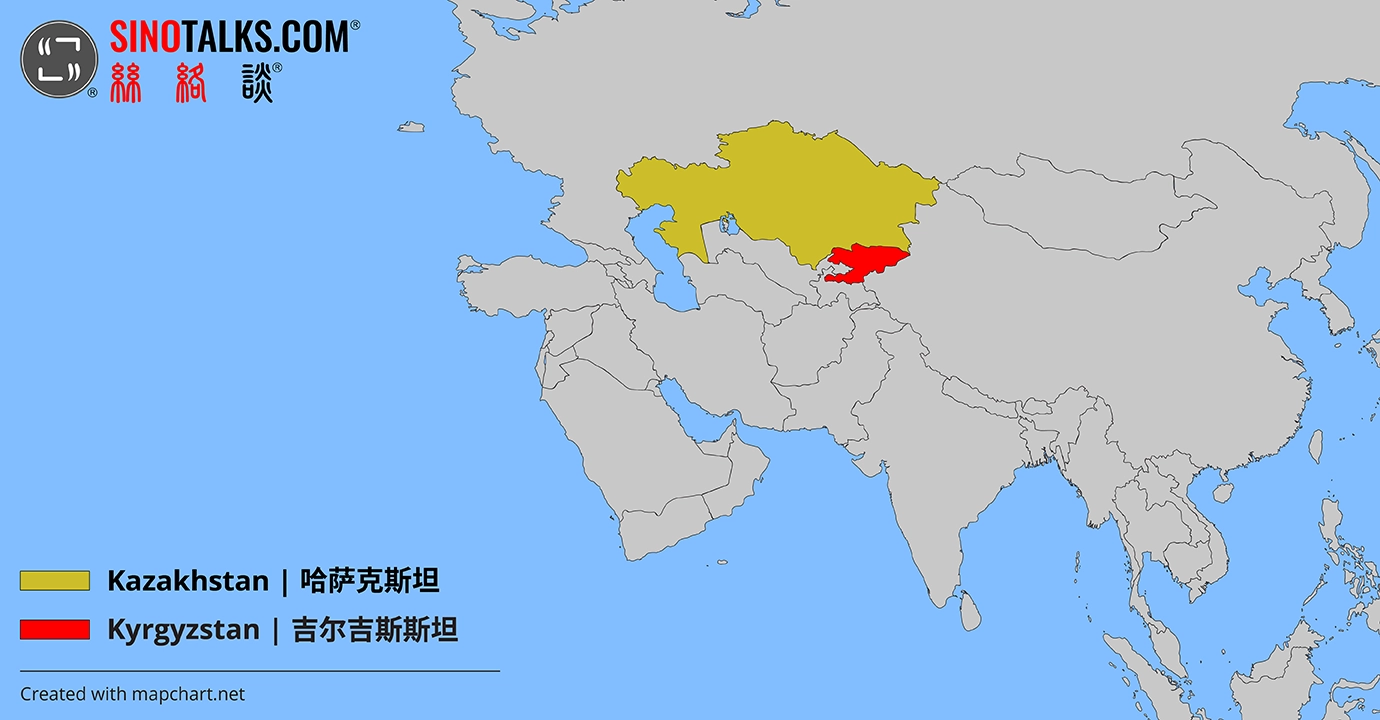
In mid-July, when the World Artificial Intelligence Cooperation Organization (“WAICO”) was officially established, Kazakhstan stood out among the 29 founding members, which include Global South nations such as Brazil, Malaysia, Pakistan, and South Africa. Headquartered in Shanghai, WAICO is generally perceived as a China-led alliance aimed at shaping global AI governance in line with the Global South’s interests to counterbalance similar Western initiatives such as Pax Silica, the U.S.-led technology alliance that also counts Kazakhstan as a member.
“[…] Kyrgyzstan is likely to outperform Kazakhstan to become a leading force supporting China to advance its interests in the region or even beyond.”
It is unclear whether Kazakhstan will be able to balance its memberships in two organizations that have competing interests. Regardless, this complicated situation, together with ways in which China’s enforcement of its new law on ethnic unity may strain Sino-Kazakhstan relations (see China’s Strategic Partners and Law on Ethnic Unity), will sharpen China’s focus on its options in Central Asia. The growing ties between Kyrgyzstan and China on bilateral and multilateral levels signal that Kyrgyzstan is likely to outperform Kazakhstan to become a leading force supporting China to advance its interests in the region or even beyond. This, however, presents a challenge to Kyrgyzstan.
Kyrgyzstan’s Economic Ties with China
Formally, Kazakhstan, Kyrgyzstan, Tajikistan, Turkmenistan, and Uzbekistan are all China’s “strategic partners”, as the Treaty on Eternal Good-Neighborliness, Friendship, and Cooperation (effective as of April 30, 2026) between the five Central Asian nations and China explicitly states that these six parties have agreed to “comprehensively develop a long-term, stable strategic partnership”. While expressions used in the treaty do not distinguish any differences in the relations between the five Central Asian nations and China, the levels of these nations’ importance to China vary in practice.
For example, the special position of Kazakhstan in the eyes of China has been apparent since 2013, when President XI Jinping chose to announce his “Silk Road” concept—which led to the subsequent establishment of the Belt and Road Initiative—during his official visit to this Central Asian nation. Kazakhstan also had the honor to host President Xi’s first international trip following the outbreak of the COVID-19 pandemic in 2022, which also marked the 30th anniversary of the establishment of Sino-Kazakhstan diplomatic relations.
However, Kyrgyzstan’s rising importance to China has become evident in recent years. In March 2025, when China announced that the National Bank of Kazakhstan met the criteria to become a member of China’s interbank foreign exchange market on March 20, 2025, the same membership had already been granted to the National Bank of the Kyrgyz Republic two weeks earlier. While both banks are equally authorized to “engage in renminbi foreign exchange spot trading”, the difference in the effective dates of their memberships appears to symbolically show that China views one bank as more important. It should also be noted that national banks of the other three Central Asian nations have not received such memberships at all.
Since then, Kyrgyzstan’s economic ties with China have continued to grow. Three developments are particularly significant. First, in mid-September 2025, Eldik Bank, a state-owned financial institution in Kyrgyzstan, became the first bank in Central Asia to join China’s Cross-Border Interbank Payment System (“CIPS”). Being part of the CIPS allows Kyrgyzstan’s businesses to make fast and inexpensive cross-border payments in renminbi to parties in China and other countries participating in the CIPS. Second, in late September 2025, a new Kyrgyz-Chinese Trade and Economic Cooperation Center was opened in Chongqing, a major metropolis in southwestern China, to allow, for example, Kyrgyzstan’s entrepreneurs to register their companies in China free of charge. Third, in May 2026, Kyrgyzstan launched international QR payments through Alipay+, enabling users of the country’s payment system Elkart to pay for overseas purchases at millions of retail locations.
Kyrgyzstan’s Support for China’s Agenda
Kyrgyzstan has also been showing strong support for China’s agenda on both bilaterial and multilateral levels.
“Kyrgyzstan has also been showing strong support for China’s agenda on both bilaterial and multilateral levels.”
On the bilateral level, since China adopted its five-year national economic and social development plan (2026–2030) (“15th Five-Year Plan”), the Institute of World Policy of Kyrgyzstan, which often promotes the Kyrgyz government’s foreign policy objectives, has advocated for the alignment of Kyrgyzstan’s national development program with China’s 15th Five-Year Plan. According to the director of the institute, such alignment is a “strategic necessity” and allows Kyrgyzstan to serve as China’s “seamless digital and physical gateway” to Central Asia.
On the multilateral level, Kyrgyzstan was recently elected as a non-permanent member of the U.N. Security Council for the 2027–2028 term. Kyrgyzstan’s election to this 15-member body, which consists of 10 non-permanent members and five permanent members (i.e., China, France, Russia, the United Kingdom, and the United States), has been applauded by Chinese media because the Central Asian nation is seen as capable of helping China pursue its international agenda through the United Nations.
In addition, the Council of Heads of State Summit of the Shanghai Cooperation Organization (“SCO”) is scheduled to be held in Bishkek, Kyrgyzstan on September 1, 2026. During this summit, the release of the Bishkek Declaration will reveal the 25-year-old organization’s future priorities. As the rotating chair of the SCO, Kyrgyzstan will help the declaration reflect the parties’ agreed approaches to the organization’s development and position on global and regional issues. At this critical moment, Kyrgyzstan’s recent organization of a high-level event to promote the fifth volume of “Xi Jinping: The Governance of China” and to encourage members of the SCO to exchange views on the book may trigger concerns that Kyrgyzstan is considering the possibility of incorporating at least some of the political thoughts of Xi Jinping into the guiding documents of the SCO.
While Kyrgyzstan’s enthusiastic promotion of President Xi Jinping’s ideology will bring more support from China to this Central Asian nation, worries about such development have emerged, to the extent that one commentator states that Kyrgyzstan is becoming a Chinese province. The challenge facing Kyrgyzstan’s leaders is how to reassure citizens of the country and its neighbors that Kyrgyzstan’s strong alignment with China’s interests will not compromise those of Kyrgyzstan and Central Asia. After all, the principles stated in the Treaty on Eternal Good-Neighborliness, Friendship, and Cooperation require China and other parties to show “mutual respect for sovereignty and territorial integrity, mutual non-aggression, non-interference in each other’s internal affairs, equality and mutual benefit, and peaceful coexistence”.
- The citation of this article is: Dr. Mei Gechlik, AI Alliances and China’s Central Asian Partners, SINOTALKS.COM®, SINOTALKS® In Brief, July 29, 2026, https://sinotalks.com/inbrief/waico-central-asia.
- The original, English version of this article was edited by Nathan Harpainter. The information and views set out in this article are the responsibility of the author and do not necessarily reflect the work or views of SINOTALKS®. ↩︎
Related Articles