Data and China’s “Open” AI Models†
Table of Contents
Estimated Reading Time
- 5 min
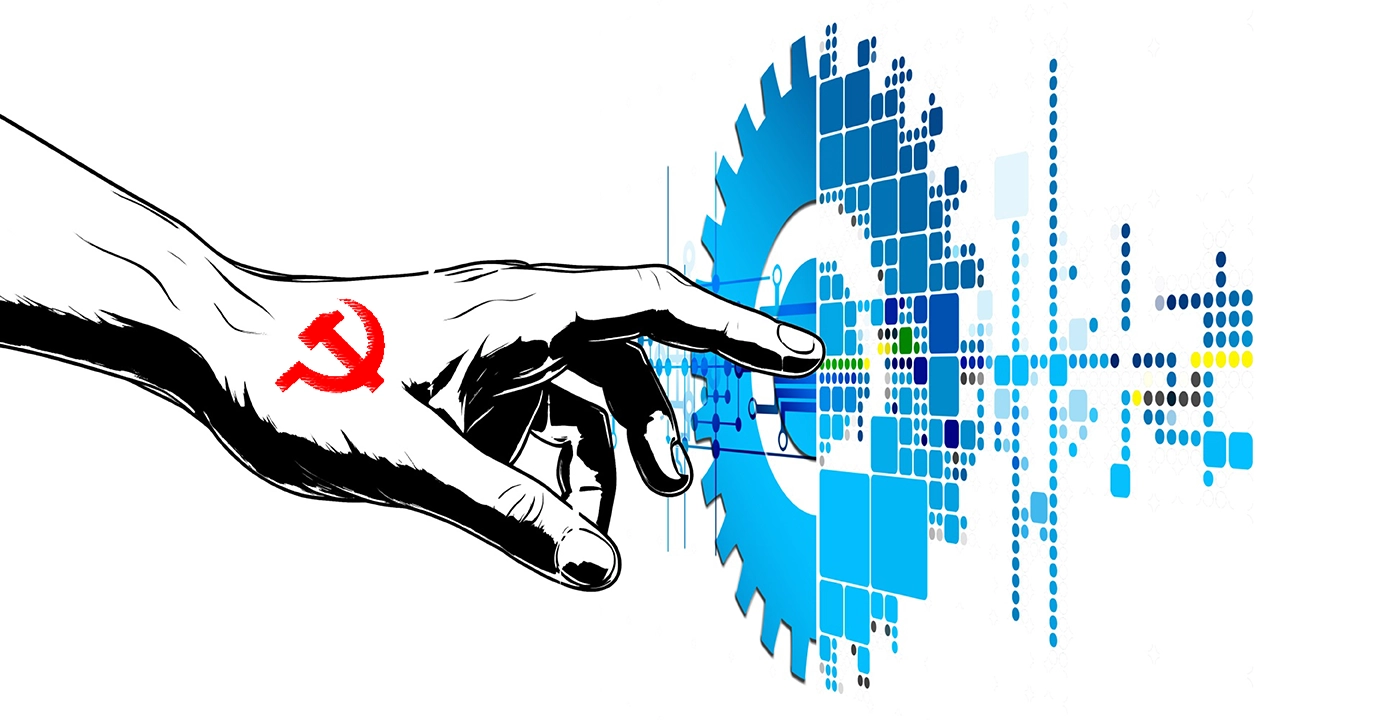
Basudev Shrestha, Communist Flag
(Publicdomainpictures.net)
The widespread adoption of Moonshot AI’s Kimi K3 has sparked keen interest in the recipe for success of this new Chinese artificial intelligence (“AI”) model. Frequently misdescribed as “open-source”, which suggests full transparency, Kimi K3 is merely “open-weight”—meaning that only the “final weights and biases” of the model are disclosed, while critical elements such as the training dataset are not.
As Moonshot AI’s continued success could help China achieve victory—or at least a big leap—in the global AI race, this may lead to the Chinese leadership’s granting the company access to massive amounts of data for training Kimi K4, which is expected to be much more powerful than Kimi K3. Understanding how China is building datasets and adopting strict measures to protect data allows other players in the AI race to weigh their options more strategically.
Data Collection
The current establishment of a new system of logistics data in China provides a glimpse into the country’s ability to extensively source data.
In November 2025, China’s National Development and Reform Commission and nine other authorities overseeing various areas, including the country’s data, cyberspace, aviation, and railway systems, jointly issued an implementation plan to build an interconnected logistics database.
The opening paragraph of the plan describes logistics as “tendons and collaterals” of China’s real economy, in the sense that logistics plays an important role in connecting production with consumption and connecting domestic trade with foreign trade. The paragraph then explains that promoting the opening and interconnection of logistics data is a crucial measure for “enhancing the efficiency of resource allocation” and “ensuring the smooth circulation of the real economy”.
Given the importance of logistics data, the plan identifies the need to expand the large-scale application of technologies such as AI and blockchain in the logistics sector to achieve “real-time collection, extensive connectivity, and efficient aggregation” of logistics data. Both government entities and enterprises of different types are being mobilized to contribute to this endeavor. In its “List of Public Logistics Data for Sharing and Open Access”, the plan specifies which government departments are required to share what logistics data and how often the shared data should be updated. In addition, key logistics and platform enterprises are expected to jointly build a trusted data space for the entire logistics industry and to establish solid mechanisms for data collection, extraction, application, and protection.
“A similarly expansive approach is likely to be used during the process of building other datasets in China.”
A similarly expansive approach is likely to be used during the process of building other datasets in China. According to the country’s five-year national economic and social development plan (2026–2030), China is committed to “building high-quality datasets for fields such as energy, transportation, manufacturing, education, health, and finance”.
Data Protection
Considering Chinese leaders’ strong focus on mobilizing all forces across society, including private enterprises, to establish interconnected data systems, it is not a coincidence that more legal rules have been introduced to ensure data security. Two administrative regulations issued by the State Council to “safeguard national sovereignty, security, and development interests”, among other goals, should be particularly noted.
First, the Regulation of the State Council on Outbound Investment, which came into effect on July 1, 2026, imposes various restrictions on investors engaging in outbound investment activities. For example, in addition to being prohibited from exporting “[certain] data, the export of which is prohibited by the State”, these investors are also required to not transfer such prohibited data to other countries (or regions) through various means such as “the cross-border dispatch of technical personnel, the organization of personnel to work in other countries (or regions), the provision of cross-border technical guidance, and the arrangement of cross-border personnel training”.
Second, the Regulation of the State Council on Exit and Entry Administration, which will come into effect on September 15, 2026, tightens controls further. For example, “relevant departments-in-charge under the State Council”, including the Ministry of Commerce, are authorized to prohibit Chinese citizens from leaving China if they are deemed to act in violation of technology export rules and their actions may endanger “national industrial security or technological security”. Further, while the authority making the decision to prohibit a person from leaving China is generally required to inform the person “in writing of the facts, grounds, and legal basis regarding the exit ban as well as avenues for legal redress”, such notification can be withheld in “circumstances where national security or the investigation of a criminal case may be affected”.
Implications for China’s Competitors
“China’s ability to mobilize all forces across society to build valuable datasets and its readiness to adopt extreme and ambiguous rules to prevent the leakage of any data present challenges to its competitors, […].”
China’s ability to mobilize all forces across society to build valuable datasets and its readiness to adopt extreme and ambiguous rules to prevent the leakage of any data present challenges to its competitors, especially those that are bound by their countries’ legal principles aimed at protecting entities’ ownership of proprietary data and individuals’ freedom of movement.
In the face of China’s competitive advantage with respect to building datasets, these competitors might have a better chance of staying competitive if they could overcome their own differences and weaken China’s access to other resources—such as chips, funds, and talent—that are needed to build powerful AI models. However, if the fragmentation in today’s world continues to grow, China will feel emboldened that such solidarity among its competitors is unlikely to happen. Will these competitors take concerted actions to prove China wrong?
- The citation of this article is: The Editorial Board of SINOTALKS®, Data and China’s “Open” AI Models, SINOTALKS.COM®, SinoExpress™, Aug. 12, 2026, https://sinotalks.com/sinoexpress/china-open-ai-data. ↩︎
Related Articles